A is for Activity
All hail the queenagers.
We are in a renaissance. We're talking about hormones. We're saying perimenopause and menopause out loud, with our full chest, in rooms where we used to whisper — or say nothing at all.
And the conversation has finally reached the gym floor.
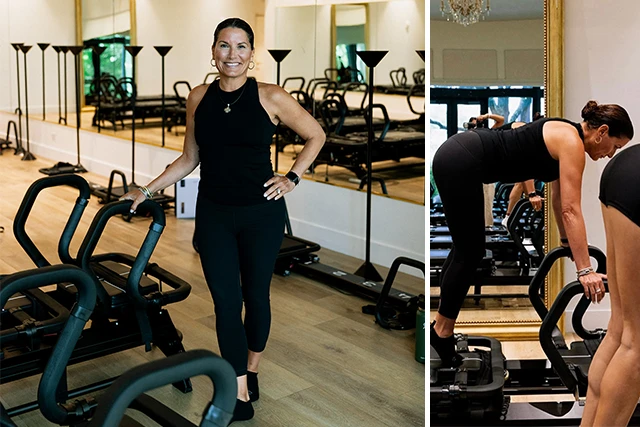
I'm Julie Kaminski, a National Board-Certified Health & Wellness Coach and Lagree instructor, and I've spent years watching women do everything right and get nowhere. Here's what nobody told them: the rules changed.
What is the SAVOR Method?
The SAVOR Method is a five-pillar framework I developed for women navigating midlife:
1. Sustenance,
2. Activity,
3. Variables,
4. Organization, and
5. Refuelment.
Rather than prescribing one plan, it identifies which of the five areas is actually the bottleneck for a given woman at a given time.
This piece covers Activity — how training itself needs to change in perimenopause and beyond.
Why do menopause-specific fitness classes exist now?
Menopause-specific fitness classes emerged because the standard fitness playbook was built on research in men and younger women, and it stops delivering results for most women around age 44. The classes are a correction, not a trend.
For two decades, the industry handed us one set of instructions. Spin at 5:45am. HIIT four times a week. Fasted cardio. Bootcamp. Eat less, move more, close the rings, chase the streak.
And when that stopped working, nobody updated the instructions.
The current correction gets a lot right:
- Strength training is non-negotiable in midlife
- Bone density, muscle mass, and metabolism all shift as estrogen declines
- Women want education, structure, and support
- Community matters more than ever
All true. But a class is not a strategy, and that's where most women are still stuck.
Why is strength training important for women in midlife?
Strength training matters in midlife because muscle is metabolically active tissue that also protects bone density — and both decline as estrogen falls. Muscle is your metabolic engine, your bone insurance, and your independence at 80.
This is why I've leaned so deeply into time under tension, controlled and intentional movement, and mind–body formats like Lagree.
But how you train matters more than it did at 30.
Why has moderate cardio stopped working for me?
The problem usually isn't intensity — it's duration at the wrong intensity. Sixty minutes at an effort that's uncomfortable the whole time but never actually maximal costs you like a hard workout without paying you like one.
Here's where a lot of us went wrong, myself included: we confused hard with long.
Short and genuinely hard still works. Lifting heavy still works. What stops working is the middle.
And it isn't happening in isolation. Stack that on a life already running high — not enough sleep, not enough protein, plenty of stress — and cortisol stops being something you spike and recover from, and starts being the baseline you live at.
Does cortisol cause belly fat during menopause?
Chronically elevated cortisol does contribute to visceral fat accumulation, because visceral fat cells carry more cortisol receptors than fat elsewhere in the body. In midlife this compounds with declining estrogen, which independently shifts fat storage toward the midsection.
Two forces, same destination.
Important distinction: this is about cumulative load — sleep debt, under-fueling, chronic stress, and unrecovered training together. A single hard workout is not the culprit. Regular exercise reduces visceral fat.
You don't get results. You get symptoms.
So the question isn't am I working hard enough?
It's am I recovering enough to make the work count?
Is it a discipline problem?
No. Most women in midlife who feel like they've lost their discipline are applying a strategy that matched their physiology at 30 to a body that has since changed how it responds to training, protein, and recovery.
I need to be stricter. I need to try harder. That's the first place almost all of us go.
But you're running on cortisol and calling it energy. You're sleeping six hours and calling it enough. And then you're blaming your willpower.
The fix isn't more effort. It's better information.
Where should a woman in midlife start?
- Build strength intentionally, not aggressively
- Ask whether you're recovering enough to make the work count
- Stop trying to out-discipline a changing system
- Give yourself permission to update the plan
Precision over punishment. Sustainability over burnout. The goal isn't to survive the workout — it's to build a body that supports the life you actually want to live.
Women in midlife were never the problem. They need better information, and a strategy built for the body they have now.
If this resonates, this is the work I do.
Coaching with me isn't another plan to follow. It's space to step back, understand what your body is actually asking for, and build a strategy that supports the life you're living now.
👉 Book a complimentary call and let's build yours.
Thriving isn't accidental. Thriving is intentional.
P.S. If it feels like your body changed overnight — you're not imagining it. You're also not stuck.
With warmth,
Julie

Julie Kaminski MA, NBC-HWC is a Board-Certified Health Coach and Founder of the SAVOR Method based in Charleston, South Carolina.
She holds a master’s degree with distinction in counseling psychology, is a graduate of the University of Pennsylvania’s Foundations of Positive Psychology certification, is NBC-HWC Certified, and maintains ACE Certifications in Group Fitness, Personal Training, and Fitness Nutrition. Whether coaching one-on-one, leading workshops, or designing group challenges, Julie’s mission is to help clients uncover their unique Blueprint to Thrive.
Answers to Frequently Asked Questions
Should women stop doing HIIT during menopause?
No. Short, genuinely hard efforts remain effective in midlife. The format that most often stops working is prolonged moderate-intensity cardio — long enough to accumulate stress, not intense enough to drive adaptation.
How often should a woman over 40 strength train?
Most guidance points to at least two to three sessions per week covering major movement patterns. Consistency and adequate recovery matter more than session count.
Why did my body change so suddenly in my forties?
Declining estrogen affects muscle maintenance, bone density, and fat distribution simultaneously. The change often feels sudden because the underlying shifts accumulate quietly before symptoms surface.
Does exercise help with menopause symptoms?
Regular strength training and movement are associated with better sleep, mood, bone density, and body composition during the menopause transition. Exercise is not a substitute for a medical conversation about symptoms.
What is time under tension?
Time under tension refers to the total duration a muscle is actively loaded during a set. Slower, controlled movement increases it without requiring heavier weight, which is why methods like Lagree emphasize it.