On advocacy, the whole equation, and what one (very doctor-heavy) month taught me about the V in SAVOR.
The short version: The V in the SAVOR Method stands for Variables — the idea that your health is a whole equation of interacting factors (muscle, body fat, sleep, hormones, cardiovascular markers, and how you actually feel), not one number on a lab report. And the older you get, the more those variables matter, and the more they affect each other.
When your best numbers in 25 years still get called "not good enough"
Let me set the scene for you.
I'm a board-certified coach. I'm also, by credential and by temperament, a card-carrying believer in goal-setting — the NBC-HWC after my name comes with decades of helping women manifest what they need to thrive — with magnetic goals as part of the equation.
So when I built my 2026 goals, one of them was simple and a little gritty: more muscle.
I want to feel strong.

And I've been doing the work. Showing up. Time under tension with Lagree. More attention to protein. The needle moved — my body fat dropped by 3% since February. To put that in context: this is probably the lowest my body fat has been in 25 years.
(Yes — pharma intervention is part of that story. We can get into the nuances another day, or you can dig through old blog posts for the long version. Today's not a confession. Today's a reckoning.)
So picture it. I walk into a comprehensive physical feeling, frankly, strong. And pretty healthy for sixty.
And my PCP looks at the numbers and says he'd like to see my body fat lower.
WTF. Read that again.
Lowest in 25 years. Hard-earned. And the message? Not good enough.
But wait — it gets better. In the same conversation, the doctor reopens the topic of putting me back on a drug for my high Lp(a). A drug that, last time around, packed pounds on me and made me feel heavy in my own body — and here's the kicker: it didn't even move my Lp(a) needle with any real significance. I gained weight, felt awful, and the one number it was prescribed to fix? Didn't really budge. And still, the unspoken assignment was the same: take it again, and quietly discount how it made you feel.
So let me make sure I have the math right. Build more muscle. Get leaner. Take the thing that made you feel terrible and didn't even work?
Aargh. So flippin' frustrating.
But here's what's different about me at 60: I don't just nod along anymore.
I spoke up. I told him this is the best I've felt in decades — strong, energized, alive in my own skin. I told him my frame is partly genetics; I am built the way I'm built — strong and solid — and I have stopped treating my own body like a problem to be solved.
Here's where I want to stop venting and start coaching — including coaching myself — because there's a real message buried in all that whiplash.
What does the V in the SAVOR Method stand for?
This is exactly where the V in SAVOR gets nuanced.
The V is Variables. Because your health was never one number — it's a whole equation of moving parts. Body fat percentage is one variable. So is muscle. So is your Lp(a). So is your energy, your sleep, your strength, your stress, your cardiovascular risk, and — yes — how a medication actually makes you feel in your own body. It's all part of your variables.
And here's the thing: the V never works alone. The whole SAVOR method was in that exam room with me. Every time I do a workshop or a presentation, I say it passionately: we are all different — right down to the cellular level. At this point in my life, my Sustenance goals include more protein — the real fuel I've finally dialed in. The Activity — every class, every stubborn show-up. The Organization — booking the physical, knowing my numbers, doing my homework before I ever sat in the room. The Refuelment — the rest and the joy that make any of it sustainable. Each pillar is part of what helps me, uniquely, thrive.
Why your health gets more nuanced as you age
And here's the part that matters more with every birthday: the older you get, the more the V — Variables — influences our recipe to thrive. At 60, the variables multiply. Muscle protects your bones. Strength protects your independence. Sleep changes how you metabolize everything. Hormones, cortisol, recovery, the medication that helps one marker while quietly taxing another — none of it lives in isolation anymore.
The math doesn't get simpler with age. It gets more interconnected, more personal, more yours. Which is exactly why reducing a 60-year-old woman to a single metric isn't just frustrating — it's bad math.
And two things can be true at once — which is the whole point of the nuance:
I can take my cardiovascular risk seriously and decline a medication that had minimal impact on the very thing it was meant to treat.
I can respect the science behind Lp(a) and insist that how a medication makes me feel is data, not drama. "This one's costing me more than it's giving me" is information. It belongs in the equation.
That's the nuance — and it sharpens with every decade. The Variables pillar doesn't stand alone. It's about honoring the whole equation — every element that makes you you — instead of solving for one variable and ignoring the rest.
Your doctors bring essential expertise; your voice matters just as much when you're weighing what's critical to your own recipe for thriving.
Two doctors, two approaches: a verdict vs. a framework
And then — because apparently June is my month of doctors — I saw my gyn. (I know. So much face time with the medical establishment for one month.) We talked about HRT. Breast cancer risk. My Lp(a). And where my PCP handed me a verdict, she handed me a framework.
Her analogy stuck with me: you can stay inside your house where it's safe, or you can go out and live — knowing the pros and the cons. Neither choice is wrong. It's a personal decision, made with real self-education and a clear eye on your own quality of life.
That. That is the V. That's the whole equation, finally treated like it belongs to me.
"They keep trying to solve for one variable. I'm the whole equation."
What does your whole self need to thrive—at any age?
So here's what I want to say to my fellow queenagers, and let me say it louder for the ones in the back:
We get to educate ourselves. We get to advocate for ourselves. We are not one number.
You're allowed to ask why. You're allowed to say that didn't feel right in my body, and that matters. You're allowed to want strength and health and energy without handing over the definition of "enough" to anyone else.
We have done a staggering amount of work to get where we are — decades of it. And we've learned a thing or two about what makes us feel strong, steady, and alive. So know those elements. Respect them. Build your life around the ones that help you thrive.
And here's the freeing part: what you need to thrive isn't fixed. It looks one way at 30, another at 55, and it will shift again at 70. The work — at every stage — is the same beautiful question: what does my whole self need to thrive, right now?
So advocate for your whole self. The strength and the softness. The labs and the lived experience. The science and the way your one body actually feels. You are not a single number to be driven lower — you are the whole equation, every variable of you, and you are the only one qualified to balance it.
We deserve to thrive. Fully. Loudly. On our own terms.
With warmth,
Julie
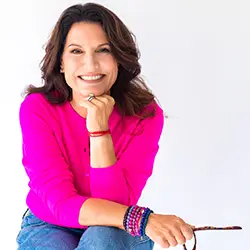
Julie Kaminski MA, NBC-HWC is a Board-Certified Health Coach and Founder of the SAVOR Method based in Charleston, South Carolina.
She holds a master’s degree with distinction in counseling psychology, is a graduate of the University of Pennsylvania’s Foundations of Positive Psychology certification, is NBC-HWC Certified, and maintains ACE Certifications in Group Fitness, Personal Training, and Fitness Nutrition. Whether coaching one-on-one, leading workshops, or designing group challenges, Julie’s mission is to help clients uncover their unique Blueprint to Thrive.
The SAVOR Method, briefly
The SAVOR Method is a five-pillar wellness framework created by board-certified health and wellness coach Julie Kaminski for women navigating perimenopause, menopause, and midlife. The five pillars are Sustenance, Activity, Variables, Organization, and Refuelment. The V — Variables — recognizes that health is a whole equation of interacting factors unique to each person, and that those factors become more interconnected with age.
Answers to Frequently Asked Questions
What does the V in the SAVOR Method stand for?
In the SAVOR Method, the V stands for Variables. It's the principle that your health is a whole equation of interacting factors — strength, body composition, sleep, stress, hormones, cardiovascular markers, and lived experience — rather than a single metric. Coach Julie Kaminski emphasizes that these variables grow more interconnected, and more personal, with age.
What is the SAVOR Method?
The SAVOR Method is a five-pillar wellness framework for midlife women, created by board-certified health and wellness coach Julie Kaminski. Its five pillars are Sustenance, Activity, Variables, Organization, and Refuelment. It is designed to help women navigating perimenopause and menopause define what personally helps them thrive, rather than chasing one-size-fits-all targets.
What is Lp(a)?
Lipoprotein(a), or Lp(a), is a largely genetically determined particle in the blood that is associated with cardiovascular risk. Levels are mostly inherited and difficult to change through lifestyle alone. Decisions about testing or treatment are individual and best made in conversation with a qualified clinician.
Can you advocate for yourself and still trust your doctor?
Yes. Advocating for your whole self means treating your lived experience — energy, side effects, quality of life — as legitimate data alongside lab results, and asking questions until you understand your options. Your care team brings clinical expertise; you bring expertise on your own body. The strongest decisions combine both.
What is a "queenager"?
"Queenager" is a term for women embracing midlife and beyond with confidence and agency. Julie Kaminski uses it for her community of women 40+ who refuse to be reduced to a single number and who advocate for their whole-self wellbeing.