






In a time when loneliness and disconnection are increasingly recognized as real health concerns, social health—the quality of our relationships and sense of belonging—is becoming an essential part of how we define well-being.
Why Social Health Matters: What I Learned Hosting My First SAVOR Society Gathering
Goal accomplished.
I followed through on a quiet promise I made to myself to host six intentional social gatherings over the course of a year.
A mix of family, longtime friends, new connections, and even our kids’ friends wove their way into these experiences.
Some nights were a blur in the best possible way, like the dance party that broke out during clean-up after our December gathering. Others felt more grounded, like the cocktail evening where conversations deepened and new faces folded naturally into the circle.
Each one mattered. But the one I keep coming back to?
The very first SAVOR Society gathering.
Why Social Health Matters More Than Ever
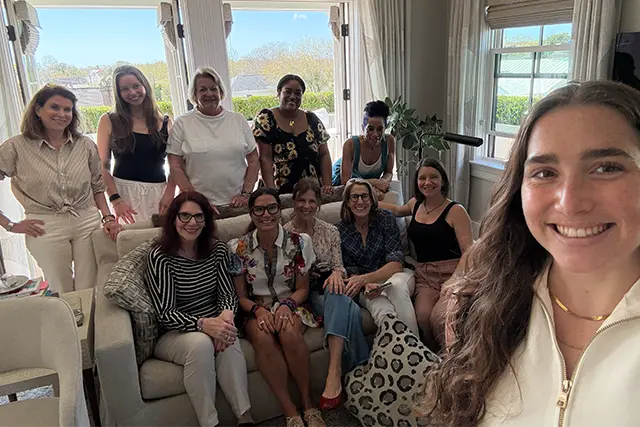
On March 11, a group of multi-generational women came together to talk about something we rarely name directly: Social health.
And increasingly, both research and lived experience are pointing to the same truth:
Connection isn’t optional. It’s foundational to how we thrive.
I’ve been quietly tending the soil for this idea for a while now, researching, preparing, and adjusting.
I can finally say that the seedling has broken through. It’s small. It’s early. But it’s alive.
And what happened in that first gathering? It told me this is something worth continuing.
What I Learned from Hosting a Multi-Generational Gathering
There were a few things I was quietly paying attention to that morning, not just as a host, but as someone genuinely curious. Here’s what happened.
Why Multi-Generational Connection Works
Going in, I wasn’t sure about the right mix. Should this be geared toward midlife women? Or something more expansive? The answer became clear in real time.
Multi-generational. Without question.
With a 50-year age span in the room, something powerful happened; insight flowed in both directions.
There was wisdom. There was freshness. There was perspective that no single age group could have created on its own. It was more than just meaningful.
It was more than just meaningful—it felt complete, creating a depth no single age group could replicate.
Why the “Container” of Conversation Matters for Real Connection
We’re all carrying something right now: global stress, national tension, personal weight. That energy could have easily taken over the room. But it didn’t. Because the conversation had a container. A clear, shared understanding:
We’re here to explore how to live with intention.
How to thrive, even in the middle of real life.
Not to ignore what’s hard, but not to spiral inside it either. Creating a safe, structured space for conversation changed everything. And I think that’s why it worked.
People stayed. They lingered. They kept talking long after the “official” end. That doesn’t happen by accident.
Let's be honest for a second. Most of us aren’t lacking opportunities to connect. We’re lacking spaces that feel:
- Safe
- Intentional
- Real
That’s the difference.
Why Structure Actually Improves Social Health and Connection
This was a subtle but important confirmation. Sometimes we assume that “organic” connection means no structure. But what I saw was the opposite.
A few thoughtful prompts. A clear intention. A gentle opening. A closing with purpose.
That was enough to help people settle in and then open up.
Not forced. Not performative. Just… supported.
Intentional gathering design helped conversations feel natural.
What Makes SAVOR Society Different from Networking or Support Groups
It’s Not Networking. It’s Not a Support Group. And Yet…
It offers something nourishing that overlaps with both.
A space to think. To speak honestly. To feel both grounded and expanded at the same time.
This tension isn’t something to fix. It’s something to hold.
That understanding has deepened the meaning of the SAVOR Society, a conceptual community that is slowly unfolding.

The SAVOR Society
The Seedling Is Real (And Growing)
I’ve been calling this a seedling for a reason. It’s early. It’s tender. It’s still taking shape.
But after that first gathering, something shifted for me. This isn’t just an idea anymore.
It’s something that can grow.
Intentional community doesn’t happen by accident; it’s built, nurtured, and protected.
The wheels are already turning:
How to thoughtfully expand.
How to maintain the integrity of the experience.
How to create space for more women to be part of it, without losing what made the first one feel so meaningful.
Want to Be Part of What’s Growing?
If this resonates, the desire for more meaningful connection, more intentional living, and a deeper sense of belonging, contact me here; I’d love to keep you in the loop.
As SAVOR Society grows, you’ll be the first to know and possibly part of bringing it to life in your own community.
As a Board-Certified Health & Wellness Coach, this is the work I care deeply about—helping women not just manage life, but truly thrive within it.
And if I’m honest…
What stayed with me most wasn’t just the conversation.
It was the feeling that something we’re all quietly craving… is actually possible.
With warmth,
Julie

Julie Kaminski MA, NBC-HWC
Board-Certified Health & Wellness Coach
Founder of the SAVOR Method
Charleston, South Carolina
Website: JulieKaminski.com
Instagram: JulieKaminski
LinkedIn: JulieKaminski
Frequently Asked Questions About The SAVOR Society
What is social health?
Social health refers to the quality of your relationships, your sense of belonging, and how connected you feel to others in your daily life.
Why are multi-generational gatherings important?
They allow for shared wisdom, fresh perspective, and deeper connection across life stages—something same-age groups often miss.
What makes SAVOR Society different from networking groups?
SAVOR Society is designed for intentional conversation and meaningful connection—not transactional networking or problem-focused support.
How can I start creating more intentional connection in my life?
Start small: invite a few people together with a shared intention, a simple structure, and space for honest conversation.