Why Health Decisions Are Often More Personal Than Perfect
Precision Nutrition Data can guide health decisions—but thriving usually requires something deeper than perfect information.
A Conversation That Stayed With Me
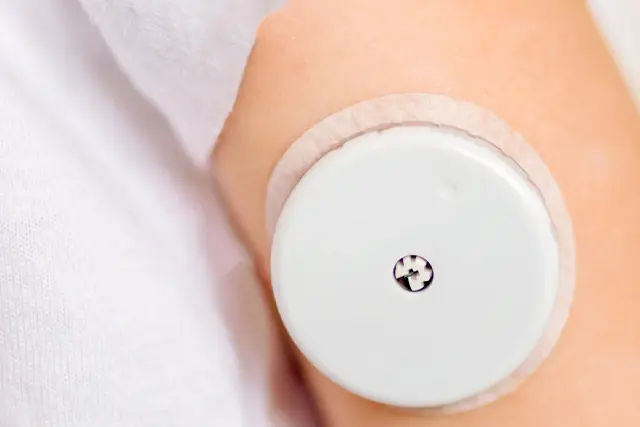
Not long ago, I was talking with someone who had recently started wearing a continuous glucose monitor.
You’ve probably seen them.
The small white disks on the back of someone’s arm.
At the gym.
At dinner.
At school pickup.
They’re subtle.
But they carry something powerful.
Hope.
She told me she wasn’t chasing optimization.
She wasn’t trying to biohack every bite.
She was tired of feeling tired.
And she wanted something measurable.
Something that might finally explain what her body was doing.
A Moment Many Women Recognize
I hear versions of this story often.
A woman who has always been thoughtful about her health suddenly finds herself in unfamiliar territory.
Energy shifts.
Weight behaves differently.
Sleep changes.
The strategies that worked for decades feel less reliable.
So she looks for information.
And the modern world offers plenty of it.
Wearables.
Apps.
Continuous monitors.
Personalized nutrition reports.
Each one promising insight.
The Promise of Precision Nutrition, and the Limit of Data
The truth is, these tools can be incredibly helpful.
They can reveal patterns.
They can spark awareness.
They can help people notice connections between sleep, stress, activity, and food.
But something interesting often happens after the first wave of data arrives.
The numbers don’t always provide the clarity people expected.
Because real life is complicated.
When Science Meets Real Life
Two people can follow the same nutrition plan and experience very different results.
One person feels energized.
Another feels depleted.
This doesn’t mean someone failed.
It means biology is complex.
Metabolism is influenced by:
hormones
genetics
sleep
stress
muscle mass
life stage
Which means the “perfect” health strategy rarely exists in isolation.
The Real Question Midlife Invites
The most powerful shift I see in midlife isn’t a new diet. It’s a new question.
Instead of asking:
“What rule should I follow?”
Women start asking:
“What does my body need now?”
That question opens the door to curiosity.
Curiosity about metabolism.
Curiosity about hormones.
Curiosity about how strength, nourishment, sleep, and stress all interact.
Thriving health refers to a dynamic state of well-being supported by balanced nutrition, physical activity, emotional resilience, meaningful relationships, and adaptive health decisions over time.
The SAVOR Method Perspective
In my work as a board-certified health coach, I look at health through a wider lens using my SAVOR Method:

S — Sustenance
(eating behaviors and nutrition)
A — Activity
(movement)
V — Variables
(individual biology and health factors)
O — Organization
(stress, structure, habits)

R — Refuelling
(rest, connection, meaning)
Health rarely improves by focusing on just one of these areas.
Thriving happens when the whole system is supported.
The Wisdom Midlife Offers
Midlife may change the rules.
But it also offers something powerful.
The chance to build health with better science, deeper self-awareness, and a little more compassion for the bodies that carry us through life.
"Thriving isn’t about fighting your body. It’s about learning how to work with it."
A Conversation for Women Navigating Midlife Health
If you're navigating questions about metabolism, personalized nutrition, or the changing signals your body sends in midlife, these are conversations I explore regularly with clients.
Together, we focus less on chasing perfect data — and more on building habits that support sustainable energy, clarity, and thriving.
With warmth,
Julie
The Midlife Metabolism Series
If this series resonated with you, you can read the full Midlife Metabolism Series here: